Showing posts with label tradition. Show all posts

Sunday, 31 May 2026

Yokosuka City, Navy Curry, and the first Samurai from England

The Golden Week holidays (April 29~May 6th) seem long gone though, like last year, my highlight was probably picking green tea and rolling the leaves myself to make tea leaves. Interestingly, the price of tea has skyrocketed in recent years due to the worldwide popularity of matcha, with exports more than doubling. May 2nd, the 88th day since the start of the spring lunar calendar, marked the official arrival of the season for newly harvested tea. However, since it started getting warm in mid-March, green tea harvesting began much earlier in many places. Now, the heat has suddenly ramped up with 1,000 people reportedly hospitalized with heatstroke in the week through May 17th and one elderly woman dying. In Hita City, Oita, temperatures reached 35℃ on May 18th, the earliest ever that the temperature in the city has surpassed the 35-degree mark. Britain too has seen similar crazy temperatures in May; the big difference though is that almost all Japanese households have air-conditioning while very few (15%?) of UK ones do. 

One potential getaway during the dog days of summer is the Miura Peninsula where the coastal sea breezes make the heat much more bearable than inland. Recently, I stayed in a unique little commune-type town atop a hill overlooking Yokosuka (横須賀), a major port which was famously the landing site where Commodore Matthew Perry arrived in 1853, leading to the opening of Japan. Today, the city is most widely known as the 568-acre home of the largest overseas U.S. Naval installation in the world, which it shares with the Japan Maritime Self-Defense Force (JMSDF). The city boasts a unique, international atmosphere but is probably most famous in Japan for its culinary staple, Navy Curry, which was adapted from the British Royal Navy in the 19th century. A recent article in the Guardian describes how it "conquered hearts" in Japan to become "a national obsession". Interestingly, the JMSDF now has a tradition of eating curry for lunch every Friday which reminded me of the British tradition of eating fish on a Friday (fish and chip shops apparently double their sales on a Friday!).

For those wanting to stay in the area and sample the food - not only curry but amazing sea food too - I recommend On Stay (bookable on airbnb.jp) located in an area called Tsukimidai (月見台=moon viewing terrace), a former municipal housing complex built in 1960 in the hills of Taura in Yokosuka City (B3 on the map). After the last tenants moved out in 2020 all 58 homes became vacant, but a community revitalization project involving the renovation of these buildings began in 2023, restoring the place into a charming new town with some 40 restaurants, cafes, studios, workshops and boutiques. Reborn as a “Nariwai Living Town” - in Japanese, nariwai means “livelihood” or “one’s way of life,” representing a lifestyle where living, working, and creating are seamlessly integrated - it has become a close community where homes double as small businesses, integrating daily life and work. Personally, I loved the vibe of the place and the unique, idiosyncratic individuals who came from all walks of life but had found their ibasho (居場所), a comfortable, welcoming community where everyone was accepted without judgment, far away from the rat race. 

Finally, before I get too misty eyed about future retirement, let me recommend one historical spot to visit in Yokosuka. Many people are familiar with the story of William Adams who became the first Englishman to reach Japan in 1600, some two hundred and fifty years before Perry. Those who have seen or read Shogun will know him as John Blackthorne, the protagonist in James Clavell's novel who was directly inspired by the English navigator. His Japanese name, Miura Anjin ("The Pilot of Miura"=三浦按針), comes from the estate in Miura (present-day Yokosuka) he was given by the Shogun. Until recently, there was some dispute over where he was buried: Hirado, Nagasaki, not too far from where he originally ran ashore, or Tsukayama Park, Yokosuka, matching his final wishes to be laid to rest looking out over Edo Bay. The latter contains the Anjin-zuka (William Adams Monument), two memorial stone towers for him and his wife (pictured). However, in 2020, researchers from the University of Tokyo confirmed that bone fragments in an urn in Hirado belonged to William Adams making the Yokosuka site a cenotaph - a memorial monument containing no remains - rather than a grave. Nevertheless, it is still moving to visit the site where the first samurai from England spent most of his life. Have you read or seen Shogun? Feel free to add a COMMENT!

NOTE: The Yomiuri Japan News carried a special feature on the Tsukimidai Housing Complex (2026/06/24 page 16) - they must be reading my blog! 

Wednesday, 29 April 2026

Getting Naked in Arima Onsen: One of Japan's Three Oldest and Three Greatest Hot Springs

Spring has well and truly come and Japan is swimming in a cascade of colours from the Yaezakura late blooming cherry trees (fluffy, dense blooms) to bright pink, red, and white azaleas (tsutsuji), from the lilac and lavender wisteria (fuji) to hedgerows of Lady Bank's yellow roses (mokkō-bara). Breathtaking!


Regardless of the season, regular readers may know that one of BritishProf's favourite things about Japan is the bathing culture. Recently, I had the chance to visit Arima Hot Springs (=onsen) in Hyogo Prefecture which has the unique distinction of being BOTH one of Japan's three oldest baths (日本三古湯), together with Dōgo Onsen in Ehime and Nanki-Shirahama Onsen in Wakayama, AND one of Japan's three great hot springs (日本三名泉), alongside Kusatsu Onsen in Gunma and Gero Onsen in Gifu. This means that Arima Onsen is the only hot spring in Japan famous for both its high-quality medicinal properties, specifically its distinct mineral-rich "red/gold" (salt and iron-rich) and "silver" (carbonic/radium) waters, and its history, spanning over 1300 years and mentioned in the 8th century Nihon Shoki (Chronicles of Japan). As an onsen fan I can't believe it's taken me almost 30 years to visit!

Though located in the mountains and boasting a very local, small-town atmosphere, Arima is easily accessible from Kobe (Shinkansen) Station or Sannomiya via a short 30-minute highway bus ride. After a dip in the onsen, it's lovely to don your yukata cotton kimono and stroll around the winding, narrow streets, packed with lots of beautiful buildings including a foot bath to soak your feet in (pictured) and stores selling the famous local treats. The most famous snacks are manju (饅頭), a traditional Japanese steamed bun with red bean paste filling, and senbei, a sweet, crispy cracker. Both boast a tansan variety which are made using the local carbonated spring water - highly recommended to nibble as you explore the town! 

My favourite area was probably the temple neighbourhood (寺田町界隈), a quiet area situated on a hill to the north of the historic resort. Dotted with yusen shrines (shrines dedicated to hot springs), temples, and retro-style ryokan inns, I enjoyed the charming atmosphere, rather different from the bustle of the main hot spring district. Tosen Shrine (湯泉神社), at the top of a long flight of stairs overlooking the town, was particularly impressive - it came as no surprise to discover that it is famous as a spiritual power spot (video here). An interesting feature of the neighbourhood was the placing of Oni-gawara (鬼瓦) roof tiles bearing the face of a demon or gargoyle on street corners, acting as amulets to keep away evil spirits. 


One final point of etiquette about public hot springs in Japan: it's taboo to wear any kind of clothing in the bath, including swimming costumes. This is of course traditional, but also for hygiene purposes: clothing can introduce 
fabric-borne dirt and bacteria (and onsen, unlike swimming pools, are never chlorinated). This can be particularly hard for British people. Compared to the Japanese - and even Northern Europeans - Brits tend to be "spectacularly bad at being naked": one survey found that 59% of British people - women significantly more than men - were either out-and-out uncomfortable naked, preferred not to say, or were unsure. Perhaps these fears are compounded by the uncertainty over whether public bathing is properly segregated. Before going to Arima, I reassured my British friends that traditional, mixed bathing (konyoku) is very rare today, thanks to shocked Western visitors and diplomats from the Meiji era who found the practice uncivilized, lewd, and un-Christian. Today, aside from a few "traditional" rural onsen, all public hot springs are strictly segregated. Imagine my surprise then, on entering the onsen at our Japanese inn in Arima (here) and discovering that there was only a low wall separating the men and women's baths, making it necessary to crouch down when leaving and entering to avoid being seen! Thoughts? Let us know in the COMMENTS!
 

Sunday, 29 March 2026

Chanko Sumo Hotpot, Live Wrestling, and Public Humiliation

Temperatures hit a high of 21℃ today which is perfect for hanami (花見) or cherry blossom viewing - picnics under the sakura trees! Tokyo is approaching full bloom right now (map here) with March 28th-April 4th given as the best viewing window, surprisingly earlier than Kyoto or even Fukuoka, which are further south. As I wrote in an earlier post, despite the image of sakura as being deeply symbolic for the Japanese, people attending hanami parties are usually more interested in eating and (especially!) drinking than admiring the blossoms. This is captured in the phrase hana yori dango - literally "(sweet) dumplings over flowers," carrying the general meaning that practical things are more important than aesthetics!

Thanks to S & N for the photo
Cherry blossom season brings hordes of tourists and some might have been lucky enough to catch the end of the Osaka Grand Sumo Tournament (honbasho=本場所), one of six held each year, which ended on March 22nd (pictured). But for those here for the sakura and still yearning to see some live sumo, but who cannot wait for the start of the next basho at Tokyo's Kokugikan (starting May 10th), there is another option: the newly opened Sumo Live Restaurant Hirakuza Ginza Tokyo (Hirakuza Ginza), a unique restaurant with a professional sumo-size dohyo ring where you can watch live sumo bouts featuring veteran wrestlers accompanied by English commentary while enjoying traditional kaiseki cuisine. There is also a sake bar which offers a selection of high-quality sake. See this article in the Yomiuri Japan News for a good overview. 
The venue itself is impressive, with around 150 stepped seats arranged around three sides of the dohyo and a giant screen at the back. While the flashy sound, lighting, and visual effects were a little too gaudy for this Brit - perhaps more in keeping with the entertainment that that one sees at American sporting events - the audience of (almost all?) tourists seemed to be enjoying it. Personally though, I wanted them to tone it down a bit to reflect that sumo is not just a sport but a sacred, spiritual culture rooted in Japanese values such as respect, discipline, humility, and dignity. The show itself though was certainly entertaining, featuring a drum performance during the meal and then introducing sumo principles, exercises (such as the ceremonial leg raising and stomping known as shiko=四股), training, throwing techniques, and rules before some mock bouts. 

The food, as mentioned above, was kaiseki (懐石), traditional Japanese cuisine featuring a number of courses that aims to balance the taste, texture, appearance, and colours of food using seasonal (shun=旬) ingredients. The hassun (八寸) for example, an appetizer to set the seasonal theme, featured an artistic assortment of three bite-sized delicacies (picture bottom) comprised of dried fruits with a creamy tofu and sesame puree (left), grilled millet gluten with sweet miso glaze and poppy seeds (centre), and spinach and chrysanthemum petals steeped in savoury dashi (right). The importance Japanese place on seasonal foods, even today when supermarkets sell foods from all over the world, stands out for me as a key difference between Japanese and British in terms of attitudes towards food. In contrast, the hot pot in the top right is a year round staple, a protein filled stew of fish, meat, and vegetables traditionally served to wrestlers​ to bulk them up known as chanko-nabe.

At the end of the show, there was a lottery for audience members who wanted to ascend to the dohyo, don a sumo fat suit, and try their hand at wrestling with one of the wrestlers. Much to the embarrassment of his companions, British Prof's named was pulled out of the hat! The video below shows British Prof's futile attempts to grab the leg of his opponent before being unceremoniously picked up and dumped outside the ring. Think I need to eat a bit more chanko stew and work on my throwing techniques! Feel free to comment upon my humiliation or share your own in the COMMENTS below. 

Tuesday, 30 December 2025

Looking Back, Looking Forward: Christmas and New Year in Japan

End of year (nenmatsu) in Japan is an extremely busy time - so much so that BritishProf missed the regular November blog post. My apologies! At university, graduation thesis supervision is the biggest burden - but that is no excuse. Anyway, I'll try to catch up here, starting with the incredible changing colours of the autumn leaves in November, a phenomenon known as kōyō (紅葉) in Japanese. Other countries also admire the fall foliage but I often think that if a country has a specific word for a phenomenon it must be especially culturally significant. It certainly seems so in Japan, with organised tours to some of the most popular spots!

December brings with it Christmas illuminations, music, decorations, and promotions everywhere including the beautiful tree at the university and hot chocolate and churros for the students! As I've written before (here), in terms of food, Christmas in Japan means two things: chicken (not turkey!) and cakes. The former is chiefly due to a smart advertising campaign by Kentucky in the 1970s whose slogan was "Kentucky for Christmas" (クリスマスにはケンタッキー). As for cakes, Christmas cake is not the rich brandy-soaked fruit cake with marzipan and icing popular in the UK but a sponge cake usually with chocolate or strawberries. On Christmas Eve, the basement of department stores (depachika) - where the grocery section is found - is usually horribly busy with crowds jostling to secure the best cake before they sell. After that, Christmas ends abruptly: Christmas Day (25th) is a regular working day in Japan and all Christmas decorations magically disappear. The British concept of the 12 days of Christmas with Christmas ending on January 6th is distinctly odd for most Japanese!

How successful has the blog been this year? In actual fact, 2025 was the most successful year ever, with over 105,000 views and two broken records: the most views for a single month (September with 24,379) and the most views for a single day (October 23rd with 2,107).

Blog Views (2025)
To put this in perspective, since the blog started back in 2017 it has enjoyed a slow but steady climb - the all time total number of views is now over 426,000 - but as the graph below shows, the last two years have been something else. Thank-you!  

All Time Blog Views (2017-2025)

If you want to look back, as is the tradition at this time of the year, you can see the Top 4 All Time Popular Posts listed on the page you are now reading!

Talking of looking back (furikaeru= in Japanese) the Japanese do that as much as anyone else, but they also enjoy "forget the year" (bōnenkai=忘年会) parties which tend to involve copious amounts of sake. There are many other unique end of year traditions. Unlike in the UK, where spring cleaning is the norm, in Japan the major house cleaning takes places now (ōsōji=大掃除). Japanese people don't send Christmas cards but instead send new year postcards known as nengajō (年賀状) which all arrive simultaneously on January 1st! Returning to one's - or if married one's husband's - home town for New Year is typical in Japan, though recent years have seen the rise of "separate homecoming" (separēto kisei=セパレート帰省) where husbands and wives return to their respective hometowns (thereby reducing the inevitable friction with the in-laws!). Japanese also love playing games at new year, particularly karuta playing cards - named after the Portuguese word for letter or card - which involves matching one half of a card, which is read out aloud, with its corresponding pair. And a visit to the local shrine or temple (hatsumōde=初詣) - either soon after midnight on the 1st, or over the following two days - to make their prayers and wishes is a new year staple.

Food wise, the traditional food eaten during the New Year's holidays from January 1st to 3rd is called osechi (おせち料理) and consists of various items which symbolise longevity and health, such as the "U" shaped shrimp which is said to resemble a bent old person's back. Mochi (餅) or sticky rice cakes are probably one of the most popular snacks - see here and here for past blogposts on eating and making your own! Finally, in terms of TV viewing, the Kōhaku Uta Gassen (紅白歌合戦) or "Red and White Song Contest" in which the top singers of the year split into teams of red (women) and white (men) and vie for the votes of audience and judges has been the traditional go-to show for New Year's Eve. Recently, though, young people have been shunning this for the many comedy shows and special manzai (stand-up) performances broadcast during the New Year's holiday to celebrate the tradition of "first laughter" - the precursor to this comedy bonanza is the prestigious M-1 Grand Prix Manzai competition final which was broadcast on December 21st this year.

Finally, in terms of memorable stories from 2025, these have to include the selection of Takaichi as Japan's first female prime-minister, the hottest summer on record, the stunning success of the Osaka-Kansai Expo which attracted over 25 million visitors, and the surging food (especially) rice prices. For me personally, though, the story which I cannot forget is the rapid rise of Japan's far-right Sanseito Party following the July House of Councillor's Election, something which marked a frightening xenophobic shift in tone in discussions on migration and "foreigners" in Japan. My paper discussing the reasons for the dramatic emergence of a party which many have likened to Reform UK and Germany's AfD should be out soon - expect a serious blog post at the start of 2026! In the meantime, let me wish all you loyal readers a very happy new year - or as the Japanese say, yoi otoshi o (良を)! As always COMMENTS are most welcome.

Saturday, 30 August 2025

Doraemon and Dorayaki in Miyashita Park

Since returning to the Japan from the UK at the end of July, two new all-time summer highs have been set, first on July 30th in Tamba, Hyogo (41.2°C) south of Tokyo quickly followed a few days later, on August 5th, by a record 41.8°C  in Isesaki City, Gunma Prefecture, north of Tokyo. Since then, there have a record ten consecutive days of 35°C or higher here in Tokyo, what the Japanese call mōshobi (猛暑日). Moshōbi are typically accompanied by "tropical" nights where the temperature doesn't drop below 25°C - though, interestingly, outside Japan this is defined differently as 20°C! The high temperatures during the day are accompanied by the shrill buzzing of the cicadas - a constant natural symphony that marks the height of summer, like a warning alarm to stay indoors. The picture shows a cicada (right) who has just crawled out of its larval skin (nuke-gara in Japanese) leaving an amazingly complete exoskeleton behind (with a zipper-like slit running right across the back).

Poster protesting Nike buy out 2008
I did venture out into the heat of central Tokyo once - blog material has to be collected! - and visited Miyashita Park in central Tokyo. Miyashita Park (宮下公園) is one of the few green spaces in Shibuya. The park has a chequered history, being moved onto man-made land in 1964 at the time of the Olympics before being bought out and renamed by Nike in 2008, something which was controversial at the time due to charging fees and clearing of the homeless (here). In 2017 it closed for redevelopment before reopening in 2020 as a shopping complex with the park, cafe, hotel, and sports facilities on the roof - now all accessible for free. The sports facilities in particular are impressive with a climbing wall, skateboard park, futsal courts, and a beach volleyball arena.

One interesting landmark on the roof is a bronze statue of Doraemon labelled “Doraemon: Door to the Future” (ドラえもん みらいのとびら)with visitors invited to "walk through to follow their dreams to an exciting future." The four-meter tall monument, which features ten other characters in addition to seven gadgets including the famous Dokodemo (Anywhere) Door which allows you to travel wherever you like, was created to mark the 50th anniversary of the “Doraemon” manga series that started its run in 1970 (here). Doraemon, a male robotic cat from the future, is one of the most beloved characters in Japan - he was appointed the country's anime ambassador in 2008 - and the TV series has been broadcast in fifty-five countries (including India, the UK, and the US). Doraemon is the highest grossing movie franchise in Japan and, alongside Pokemon and One Piece, is a global franchise: over 300 million copies of the manga have been sold worldwide and some forty films have collectively grossed over $1.8 billion. The franchise is also said to generate over $500 million in annual global retail sales from merchandise and other products.

The localisation of the show - the way it underwent cultural adaptation to better fit with local audiences - was interesting: names were changed, gender stereotypes were tweaked (scenes of boys crying were cut in the US for example), and Japanese food was swapped with local equivalents (such as pizza and popcorn in the US). One food that was originally cut but made a return after a popular outcry was Doraemon's favorite dorayaki (どら焼き) - a traditional Japanese sweet of azuki red bean paste sandwiched between two small pancakes, sometimes with cream. It was given a variety of English names from "fudgy pudgy pie" in the early manga, to "yummy buns" and "dora-cakes/bean jam buns" in the TV series.

Doraemon holding a plate of dorayaki
For Japanese fans, however, changing the name of the eponymous dorayaki is sacrilegious since Doraemon's fondness for them forms a central part of many of the storylines and key scenes.  Dorayaki themselves have been said to reflect the essence of Japanese culture in various ways: as a symbol of Japanese hospitality and gift-giving, an example of how Japan integrates ancient traditions with modern innovation, a reminder of one's first love, and a symbol of positive emotions like warmth, kindness, and affection (here). Fans can eat the traditional sweet snack, as well as various other character themed dishes, at Doraemon F's Kitchen (ドラえもん F'sキッチン) in the Miyashita Park shopping centre below the park itself. When I went there was quite a queue, particularly Asian tourists. There is in fact a Doraemon museum in Kawasaki called the Fujiko・F・Fujio Museum named after the author who lived there. Please let me know in the COMMENTS if you want me to visit - I'd be interested to know just popular the robot cat with no ears actually is outside of Japan!

Tuesday, 29 April 2025

Play to Win: Japanese Traditional and Modern Games

Even though it's only April, it already feels like summer in Japan, with temperatures pushing 30℃ here in Tokyo in the run up to the start of the traditional Golden Week holidays. There has even been talk of Japan's four distinct seasons disappearing under the threat of global warming; certainly, while summers have grown longer, spring and autumn seem to be over in the blink of an eye. For example, while wisteria usually blooms late April to early May, it's already been out for a while. 

Recently, I've been exploring the gaming scene in Japan, with a visit to a board game cafe in Shinjuku (pictured above), an escape room game in Asakusa, and a game and hobby shop in Akihabara, the centre of Japanese geek (otaku) culture. The big two games historically are Go (igo in Japanese) which came over from China around the 7th century - modern variants include Gomoku, Renju, Reversi, and Othello - and shōgi (Japanese chess), a unique 16th century Japanese invention that allows captured pieces to be reused. The latter is the most played board game in Japan, with an estimated 20 million knowing the rules and ia also very visible in the media: Sota Fujii, who became a professional shōgi player when an junior high-school student, is a national icon, newspapers carry shōgi puzzles daily, and there is even a dedicated shōgi TV channel featuring live games! 

An even older game is Sugoroku (双六), a 6th century creation similar to backgammon that morphed into a Snakes and Ladders type dice-based picture boardgame (e-sugoroku) popularly played at New Year. But probably the most interesting for non-Japanese players are the variants of karuta playing cards - from the Portuguese for letter or card - which involves matching one half of a card, which is read out aloud, with its corresponding pair. This can be highly competitive when played as a duel when players slap the matching card before their opponent - check out this video from the 64th All Japan Championships (第64回全日本選手権大会) held only a few days ago! Manga lovers may be reminded of Chihayafuru which played a big role in popularising competitive karuta. While the video shows Uta Garuta (hyaku-nin isshu=百人一首) featuring waka poems by 100 great poets, there is also a kid's version, with cards representing the 47 syllables of the hiragana alphabet. Great for learning Japanese!

But it is not all about tradition. Modern Japanese board games which have enjoyed critical acclaim overseas include the 2012 Love Letter, the classic 2014 Deep Sea Adventure, and the road building 2016 masterpiece Tokyo Highway. For a great overview of these three and traditional games as well see here. And for those in Japan, why not check out the gaming convention known as Game Market, which started in 2000 as a fan-run event and is now held in May and November at Makuhari Messe just outside of Tokyo? Another recommendation is the 4-day September Tokyo Game Show which, in contrast to the analogue focus of Game Market boasts mainly video game content, though it does include some board games as well as lots of cosplayers! In sum, the gaming market in Japan is booming, perhaps reflecting the fact that in Japan gaming is more than just entertainment - it’s a deeply ingrained social activity. What's your favourite game? Have you ever played a Japanese game? Let me know in the COMMENTS!

Sunday, 30 March 2025

Bathing Culture in Japan: Public Baths, Hot Springs, and High-tech Tubs

My 4th year students graduated last week - dressing up in the traditional hakama (here) to receive their graduation certificate from the president - though it was a bit of shock to wake up to a heavy snowfall! Indeed, the weather has been very strange recently, 26℃ on Friday and 13℃ on Saturday. Nevertheless, spring is in the air, with the cherry blossoms now at their peak, after officially starting to bloom on the 24th. While many people are content to sit in the park under the trees and enjoy a picnic (known as hanami), a great way to properly enjoy the sakura experience is to take an evening boat ride under the blossoms on either Chidorigafuchi Moat (here) or Meguro River (here).

The awareness of the Japanese towards the changing seasons and their appreciation of seasonal foods is one of the reasons I love Japan, but for me perhaps the biggest draw of all is the bathing culture - nothing beats a visit to a hot spring (onsen) or even the local public bath (sentō). Of course, it's not realistic to visit these places every day so a fine substitute is the household bath which enjoys a level of technology that puts the British bath to shame. Earlier this month we had our bathroom renovated so I thought this would be a good opportunity to promote the joys of domestic bathing! The picture above shows the process of removing the old bath and installing the new one. One interesting point is how the bath is typically cleaned before it is demolished to show respect for years of use (this is also done before disposing of old cars or even used needles (here)! Respect for objects that have served one well is a nice custom but that doesn't detract from the joy of a new high-tech bath. Note that the new bath is not only lower but lacks taps too. As the control panel below shows, the bath in Japan is filled automatically and the temperature, height of the water, and even the length of time the temperature is to be maintained can be set. The most recent models even allow baths to be controlled via smartphone app from outside the home, so you can come home to a steaming hot bath after a hard day's work!

During the four-day renovation, I made use of a local sentō just down the road, actually a super sentō named Terme Ogawa which unlike the simple local neighbourhood public bath comprises a large complex of multiple baths and saunas as well as restaurants, massage, and relaxation rooms (map below). Regarding the difference between public baths (sentō) and hot springs (onsen), the latter use natural spring water while the former use boiled tap water - subsidised under the Public Bathhouses Law - explaining why sentō are often distinguishable by their chimney. The distinction is not clear cut however, particularly in the Kanto region, where super sentō like the one I visited often also describe themselves as "natural hot springs" (天然温泉). 

Map of "Super Sentō" Terme Ogawa (©Termeogawa) here
With the spread of private bathrooms from the 1970s, public baths plummeted in popularity and many went out of business. Data for Tokyo, for example, reveals 1968 as the peak, with 2687 sentō in the capital faling to only 444 in 2023. However, since around 2014, public baths have enjoyed something of a revival - in tandem with the sauna boom (sakatsu=サ活) - as a community spot or hub, especially among young people and foreign tourists. For example, last year, a new sentō tour named Sentorance Japan started with the aim of making sentō an "entrance" to Japanese culture: the tour includes a lecture on sentō etiquette in English followed by a bath. There are also a number of non-Japanese involved in preserving and restoring bathhouses such as Sam Holden and Stephanie Crohin. In terms of a specific recommendation, why not check out Denkiyū, a small sentō located in Kyojima, Sumida ward, which featured in the film Perfect Days? One thing you may notice in both public and private baths in Japan is a small stool which Japanese typically sit on while washing before getting into the bath. This is crucial - Japanese enjoy the bath for relaxation never for washing, and since they enter the bath clean usually reuse the same (clean) water for a few days before refilling. Certainly, British bathing seems primitive in contrast! Thoughts? Please write in the COMMENTS section.

Friday, 31 January 2025

Visiting "Little Edo" for New Year: Buying a Daruma Doll and Eating Daifuku in Kawagoe

A big akemashite omedetō (Happy New Year) to all readers at the start of 2025! While making new year's resolutions (新年の抱負=shin'nen no hōfu)is not as popular in Japan as in the West, a similar but rather unique cultural tradition centres around the daruma doll, a round, bright red, hollow paper-mâché figure representing the Buddhist monk Bodhidharma with a weighted bottom that enables it to bounce back when knocked down (like Weebles in the UK). This feature contributes to its popularity as a charm for good luck and encouragement, echoing the Japanese phrase nanakorobi yaoki (seven times down, eight times up) which signifies bouncing back from adversity and never giving up. When bought the eyes are usually blank (closed) and people fill in the left eye when making a wish or setting a goal and then fill in the other eye later when the wish is fulfilled or the goal is achieved - politicians typically do this at election time. Many temples hold new year markets selling these and I visited one of the biggest held at Kita-in temple (喜多院) - also known as Kawagoe Daishi (川越大師) - in Kawagoe City held every January 3rd.

Kawagoe City is located north of Tokyo, in Saitama Prefecture, and is often referred to as "Little Edo" - Edo is the old name for Tokyo - due to its many old buildings and retro Showa/Taisho atmosphere. Certainly wandering down the main street, surrounded by the ubiquitous food stalls encouraging you to snack as you walk, it would feel like stepping back in time, if it wasn't for the flood of foreign tourists (though to be fair, some do get into the spirit by utilising the many kimono hire stores). Walking along the main street I also spotted a daruma painting workshop in which participants can colour and draw the faces of daruma (the same shop has a delightful footbath cafe in the back which you should definitely check out). Other highlights include the Bell of Time (時の鐘=toki no kane), a bell tower which chimes four times a day and many buildings in the traditional kurazukuri (蔵造り) or warehouse style with walls finished with mud and plaster supposedly making them fireproof, damp-proof and even burglar-proof!

Street food is certainly a key point of the Kawagoe experience. Sweet potatoes (satsuma-imo=さつま芋) are probably the most famous of these and you can grab a bag of crisps, ice cream, or even sweet potato beer and coffee to sustain you as you battle the crowds. Sweet Shop Alley (Kashiya Yokocho=菓子屋横丁) is an area dedicated to traditional sweets and cakes and has a wonderful retro atmosphere. Another edible recommendation is daifuku (大福) - literally "big luck" - a type of Japanese sweet (wagashi) with mochi (chewy rice cake) wrapped around a sweet filling, typically anko (red bean paste) or fruit. Kawagoe has an amazing shop - prepare to queue - with paper thin mochi wrapped around a variety of high quality fruit such as strawberries, musk melon, mango, kiwi, orange and many more. The prices are astronomical - we paid ¥650 (over £3 or $4) for one strawberry - but the eating experience, where you use a fine thread to slice it in two and then savour, is probably worth the fee as a one-off cultural experience.

My daruma doll has one eye filled in, though since I wished for peace (a theme emphasised in the last post of 2024) I fear it may well be a while since I am able to draw in the right eye. In actual fact, the dolls are usually burned at the end of the year in a purification rite so it might remain with one eye closed (video here)! I could also have wished for a response to global warming though I might be waiting even longer to have that wish fulfilled - we still have not had any snow here in Tokyo, so no chance to build a yuki-daruma, the Japanese word for snowman (the Japanese snowman is typically two not three sections reflecting the shape of the daruma!). Finally, for those of you who have watched Squid Game, the Statues (Red Light Green Light) game is called Daruma-san ga Koronda (Mr Daruma Fell Down) in Japanese - go figure! If you have any wishes or goals for 2025, please let me know in the COMMENTS - I'll send a Japanese daruma doll to the best suggestion!

Saturday, 28 September 2024

A Zazen Retreat in Japan: Paying Attention to the Here and Now


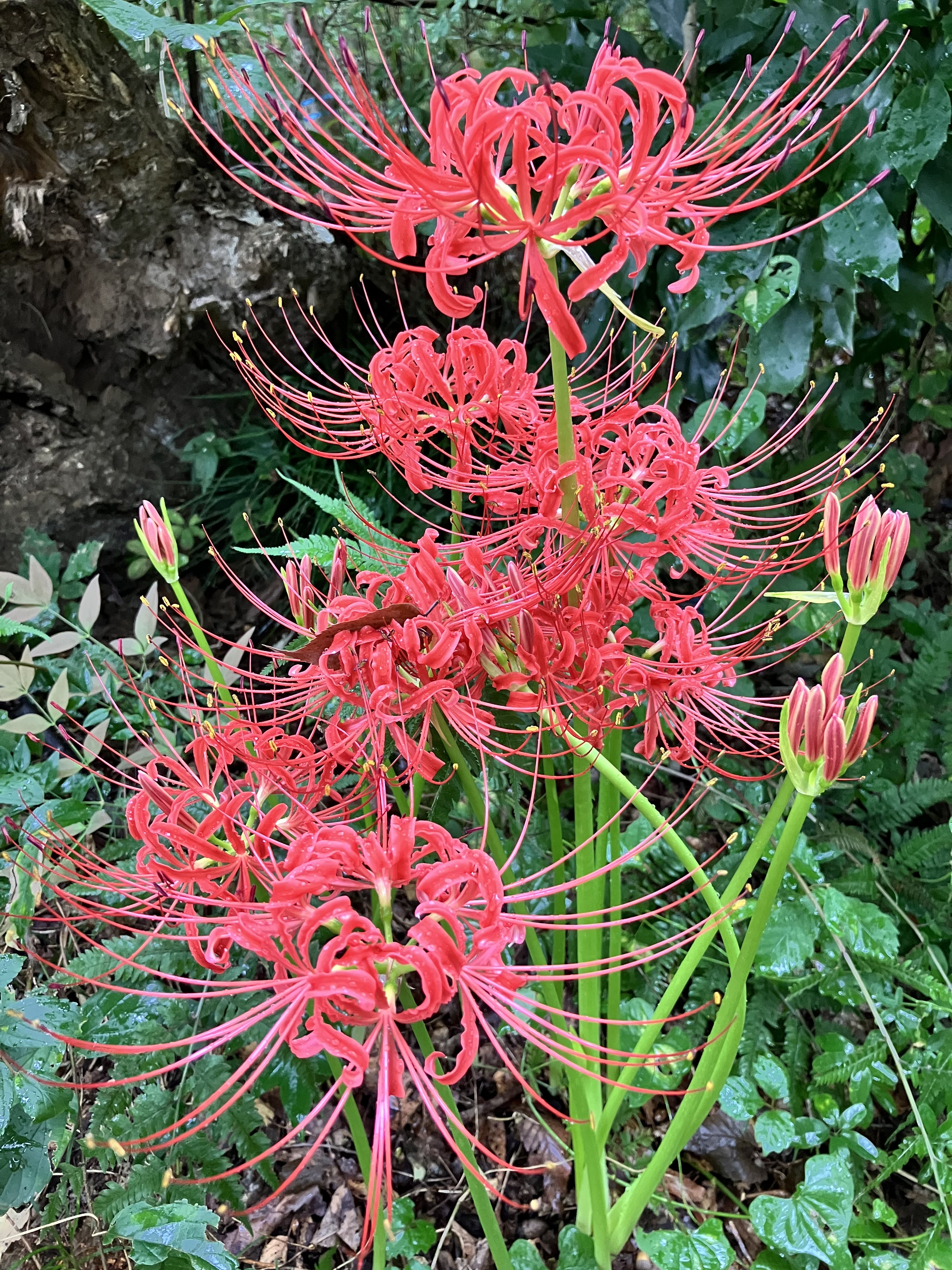
After months of terribly hot weather - and constant AC, day AND night - it's finally started to cool down here. Temperatures were typically 10℃ higher or more than the yearly average making for a pretty unbearable summer. As much as I like Japan, I'm going to have to give serious thought to spending the summer back in the UK to escape the heat. Indeed, some of my retired ex-pat friends do just this, having the best of both worlds by avoiding the Japanese summer and also avoiding the long, dark, miserable UK winter (Japanese winter is pleasant - and sunny!). But that's one for the future - for now, I'm just enjoying the cooler temperatures and the signs of autumn, one of which are the gorgeous red spider lilies (higan-bana =彼岸花) which are popping up all over the place.

Last month's post focused on the film Perfect Days and as I wrote there, the film caused me to reflect on the idea of mindfulness, with its emphasis on slowing down, analogue over digital, simplifying life, paying attention to the here and now, taking in your surroundings one thought at a time, and the cultivation of curiosity, wonder, and awe. Thinking about it, mindfulness has much in common with zen, the Japanese school of Mahayana Buddhism, originally from China, which emphasises the value of intuition through silent meditation - giving attention to only one thing - rather than enlightenment through ritual worship or the study of scriptures. The term zazen (座禅)literally means seated meditation - usually cross-legged, in the lotus position.

Here I'm going to introduce one zazen experience available for English speakers, a temple in the mountains of Saitama called Shokakuji (正覚寺). The Japanese web site promotes its overnight and one-day zazen experience, noting how the peaceful, natural environment provides a space for self-reflection in both body and mind through zazen, Buddhist talks by the priest, vegetarian cuisine, sutra copying - and even life counseling! The English website invites enquiries in English and also contains the schedule for the overnight programme (pictured). Here Shojin Ryori (精進料理) refers to a special kind of vegetarian cuisine derived from the dietary restrictions of Buddhist monks (no fish or meat).

As advertised, there are two zazen sessions which involve sitting cross-legged on a cushion, staring at a point in front of you while focusing on one's breathing for around 30 minutes. It seemed very long and - by the end - very uncomfortable (especially the legs) though there was no being hit by a bamboo stick if you move or slump like I heard happens in some other places. In the (very early) morning session, zazen is followed by a sermon where the priest talks about Buddhism and the key concepts, including live lessons. Meals are eaten in complete silence and are very simple, just plain rice, miso soup, and lightly seasoned vegetables. Finally, there is the copying by hand of (fairly long) Buddhist sutra known as shakyō (写経) - this is all in kanji so probably not for the Japanese beginner. Surprisingly, the 9pm lights out is not strictly enforced - after the priest goes to sleep, you're pretty much free to do as you like!

Interested? There are many places that offer foreigner-friendly retreats throughout Japan, some more expensive than others. There's a list of eight of the most interesting here; the Japanese National Tourist Organization (JNTO) site also has a good overview. For those of you who want more of a challenge, you could try the women-only five-day yamabushi mountain priest training at Mount Haguro in Yamagata which includes meditating under waterfalls! But wherever you are, mindfulness is something that could help simplify life and give you more space - check out the fantastic MSBR (Mindfulness Based Stress Reduction) free online 8-week course here. Share your (simple) thoughts in the COMMENTS!

Wednesday, 31 July 2024

Dog-Friendly Travel in the Izu Peninsula and Praying for Pets' Health at Jingi Shrine

Here in Tokyo, the rainy season is over, and the brutally hot summer heat has hit with a vengeance. Shizuoka reached 40℃ on July 7th and its pretty much certain that the 2020 record of 41.1℃ will be broken at some point this year. The Japan Association for Acute Medicine (JAAM) seems to think so too, and has added a new "special heatstroke alert" (熱中症特別警戒アラート) level to its heatstroke index; the Ministry of the Environment publishes a daily map showing which areas are under heat stroke or special heat stroke alerts (pictured). This is based on the Wet Bulb Globe Temperature (WGBT), a measure of the heat stress in direct sunlight; anything over 31 is classified as dangerous and exercise outside is not recommended. Special cooling shelters (クーリングシェルター)have been set up in community centres and shopping malls and parasols have become ubiquitous, among both men and women.


As well as keeping hydrated, as I have written before, one of the ways to prevent heat-stroke, avoid natsu-bate (heat fatigue), and generally survive the fierce Japanese summer heat is to eat nutritious, stamina-boosting foods. Traditionally, foods beginning with "u" are said to be good and one of the best is unagi or eel. In fact, there is a special day for eating eel known as doyō no ushi no hi (土用の丑の日) or "day of the ox", traditionally the height of the summer. This year doyō no ushi day fell on July 24th, though there is also a second "eel" day on August 5th (for a full explanation see here). Personally, I also love deep-fried eel bones, crunchy, salty, and guaranteed to shake off the summer blues - though every single one of my British friends found them utterly repugnant when I brought them back as souvenirs on my last trip back!

Looking for a little respite, we headed to the Izu Peninsula (伊豆半島) which, despite being in Shizuoka Prefecture, is a good three or four degrees cooler than Tokyo. I highly recommend the Odoriko (踊り子) special train which runs from Tokyo, via Atami, to either Shimoda (stopping at Kawazu) in the south or Shuzenji on the west coast. I have already written about Atami, the traditional Japanese sea-side resort and hot-spring paradise. I would also recommend Kawazu, famous for its 850 cherry blossom trees along the Kawazu River in the spring. In this extreme heat though the best thing about Kawazu is the hour-long trail in the mountains along the “seven waterfalls of Kawazu,” (河津七滝) which is deliciously refreshing and cool to walk along. This area is also the setting for Nobel Literature Prize Winner Yasunari Kawabata’s famous novel of first love, “The Dancing Girl of Izu” (伊豆の踊子) from which the special train gets its name. Kawazu is also famous for wasabi (Japanese horseradish) grown in the streams of Amagi, and local wasabi dishes, such as buckwheat noodles and even ice-cream, are widely available.

We stayed near Ito City not far from the coast since we wanted to take our much-loved dog, Jaz (Jasmine), to the beach where she loves digging holes in the sand - but adamantly refuses to go near the water! The whole area is amazingly dog-friendly, both in terms of restaurants/cafes and accommodation. Jaz is a "shelter dog" (hogoken=保護犬) who was found abandoned and dangerously mal-nourished in Saitama in spring 2011; she was taken to a government shelter (保健所) where she was due to be put down but was saved by a local animal rescue organisation and we adopted her in October of that year (see here for an older post). Two years ago, she was diagnosed with leukemia (白血病) and has been undergoing treatment at a university hospital in Musashino City since. Not knowing how much time we have left together we wanted to spend some quality time with her - and also take her to the famous dog/cat shrine at Jingi Shrine (神祇大社) in Ito to pray for her health.

Climbing up the steep stairs to Jingi Shrine, one is greeted by a magnificent view of the coast and refreshing sea breezes. After entering the shrine through the Torii gate and before praying at the altar, it is customary to purify yourself by washing your hands in a water trough with a ladle and in a nice touch there is a small stone water bowl where pets too are invited to purify themselves, a practice known as okiyome (お清め). We prayed at the shrine and then went over to the shop to buy an omamori (lucky charm or protective amulet) for Jaz; the priest also performed a purification (oharai=おはらい) ritual to drive evil spirits away by chanting and shaking bells (see the video below and note Jaz' reaction!). One can also buy a wooden wish plaque known as an ema (絵馬)in the shape of a dog or cat's head on which you draw your pet's face, write a wish, and hang up with hundreds of others. This (Japanese) post gives a great step-by-step description of one dog lover's trip to the shrine with her two dogs. Anyway, enjoy the video and look forward to hearing your COMMENTS!