|
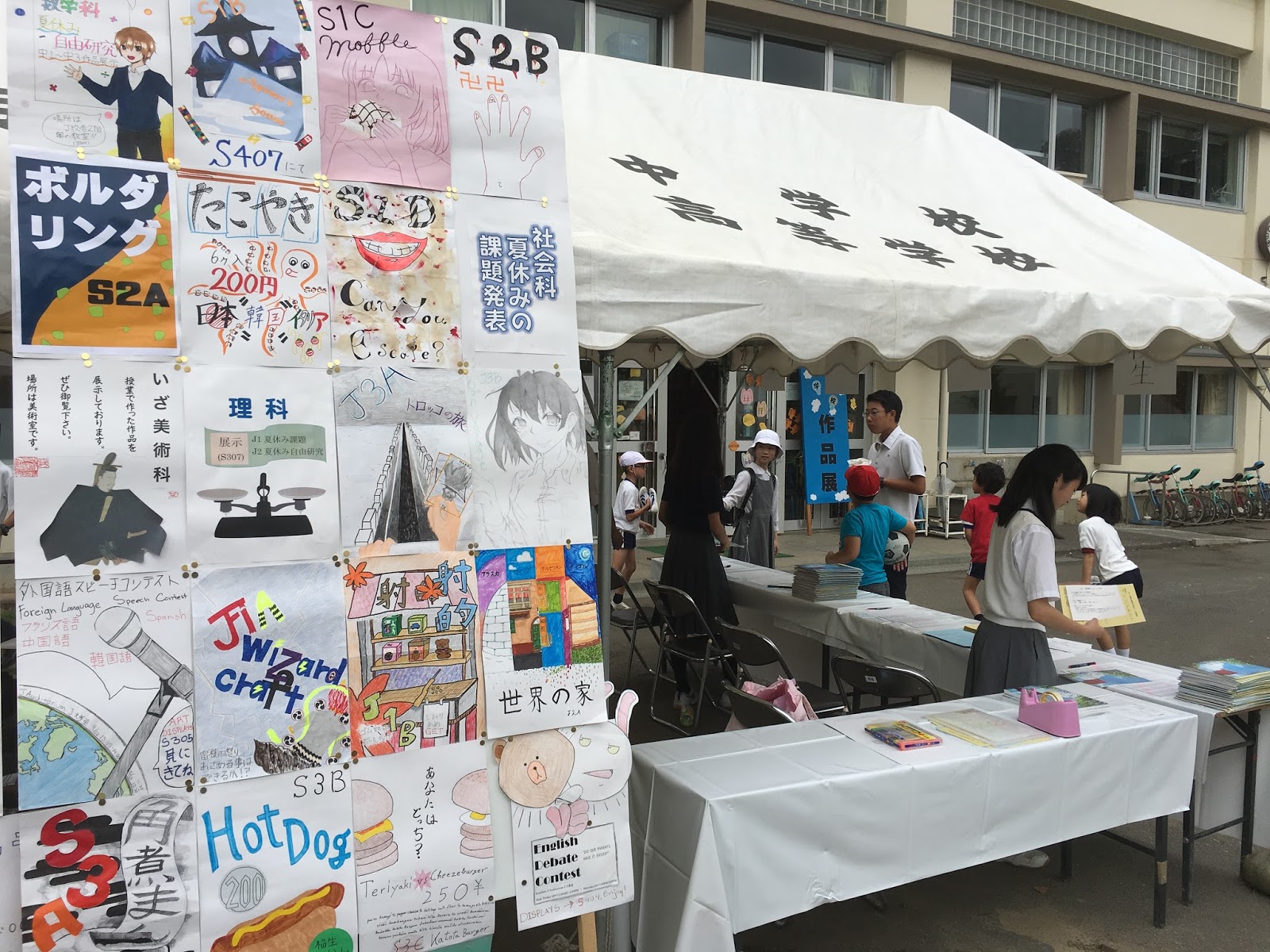
| Culture Festival (bunka-sai) reception with class posters |
Autumn is a busy time at Japanese schools with two major events to prepare: the culture festival (
bunka-sai =文化祭) and sports day (
undō-kai =運動会) - though in recent years, many schools have been moving the latter to spring due to lingering high temperatures and typhoons. This weekend I attended the former -
bunka-sai - at a local school which was full of the usual food stalls, performances, attractions, presentations, English debates, displays, and club activities one finds at such festivals. A new event this time round though was tea ceremony (
sadō = 茶道) which, like at many schools, is now an elective subject for third-year high-school students (judo has also become part of P.E. classes). The emphasis on learning "traditional culture" reflects the reform of the Fundamental Law of Education (Kyōiku Kihon Hō=教育基本法) in 2006 which for the first time introduced "fostering the value of respect for tradition and culture and love of the country" as an objective of education (English
here; Japanese
here).


At the culture festival, students made and served tea to guests while the teacher gave an explanation of the finer points of manners and etiquette. The students - both male and female - were traditionally dressed in
yukata (浴衣) - pictured left and right. The
yukata is a light cotton "kimono" a common sight at the many summer
firework displays. The first
kanji means to take a bath(
abiru =浴びる) which reflects the fact that it is also used as a bathrobe (hotels with hot springs will usually supply a simple
yukata for guests).
A common question relates to the difference between a
yukata and a kimono (着物) proper (here I focus on the female versions). Apart from the material (typically light cotton vs heavier silk), a key difference is that the hanging "wing" sleeves are longer in a
kimono, at least for single women (the
sode or sleeves of married women are shorter, similar to the
yukata). Another difference, is the time it takes to put on: whereas a
yukata can be put on in 10 minutes or so, a kimono is complex and without taking classes - or at least a little help - is pretty much impossible to put on by yourself. An inner layer or layers of underclothing is also worn with a
kimono. Finally, the belt or sash (
obi =帯) is tied differently: the yukata
obi is a simple bow which is tied at the front first (or sometimes comes pre-tied) and then slid around (video
here); in contrast, the kimono
obi is much broader and longer (and tighter!) and there are various ways of tying it (see one example
here). Below are some pictures of the students serving tea at the festival, though the snaps don't
do justice to the grace, refinement - and nervousness - of the
student participants!
 |
| A male student prepares the tea as female students carry more in for guests. Note the cast iron kettle (tetsubin) |


 Friday saw a night out in in Tsukiji, the area containing the largest wholesale fish market in the world. Currently located in central Tokyo, just a stone's throw from Ginza (a short walk from the famous kabuki theatre), the market is due to be relocated to a new site in autumn 2018. The market itself is a popular tourist attraction, though if you want to see the early morning auction - starting at 5:25am - you'll have to start queueing for one of the limited places early, maybe just after 3:00am when the market opens! After the auction, the market springs to life with some of the freshest fish you'll ever see on sale, particularly different cuts of tuna which increase in price as the fat content increases: the most common cuts are red fin meat known as akami (赤身); slightly more fatty chūtoro (中とろ) from the middle belly; and super fatty ōtoro (大トロ) from the lower belly. You might even be lucky enough to see a tuna being carved up (top right). The market also boasts some of the most delicious sushi and sashimi restaurants (though be warned, they are not cheap). How about a kaisendon (海鮮丼) - assorted seafood on rice - for breakfast? See here for a great video showing the auction followed by a little shopping afterwards.
 I was lucky enough to know a couple who run a sashimi (raw fish) bar just down the street from the market called Kashigashira. The husband had worked as a middle man buying and selling fish in the past, a job which involved sleeping in the afternoon and getting up late to catch the last train to the market to work from the early hours. With good contacts, the decision to open a restaurant - bringing slightly more "normal" working hours - was a logical next step. Needless to say the food was amazing (note the menu changes daily depending on the day's catch). For example, the plate of sashimi pictured left contained beautifully marbled Oma (大間) in the centre, a tuna named after a small town in Aomori, northern Japan, which is a real delicacy (my Japanese wife said she had never eaten it!). It also included adult amberjack which is called buri in Japanese (in contrast, young amberjack is called hamachi, reflecting the fact that, in Japan, fish are called different names as they grow older (known as shusse-uo =出世魚). Another dish which appeared as part of a long three-hour course grilled salted maguro. The picture below shows the jaw (ago) of the giant tuna. Gochisō-sama deshita!